

‘Empathy’, the heart of Design Thinking: “The definition of empathy is the ability to be aware of, understanding of, and sensitive to another person’s feelings and thoughts without having had the same experience. As human-centered designers, we consciously work to understand the experience of our clients and their customers.These insights inspire our designs” — IDEO
According to Hodges and Myers in the Encyclopedia of Social Psychology, “Empathy is often defined as understanding another person’s experience by imagining oneself in that other person’s situation: One understands the other person’s experience as if it were being experienced by the self, but without the self actually experiencing it. A distinction is maintained between self and other.”
Psychologists have identified three components of empathy: Cognitive, Emotional and Compassion.
- Cognitive: the capacity to understand another’s perspective or mental state.
- Emotional: the capacity to respond with an appropriate emotion to another’s mental states.
- Compassion: an emotion people feel when others are in need, which motivates people to help them.
Exercises that strengthen empathy:
- Being Curious.
- Listen actively. Practice active listening by reformulating the message to the person who just said it.
- Mirroring.
- Practise mindfulness.
- Be curious i.e. Ask questions to understand but not to listen to respond/argue.
- Listen with your eyes and ears.
- Stronger interactions.
- Build trust.
- Exercise empathy by learning impactful techniques like Observation, Interviewing and many more.
- Hormone called Oxytocin increases emotional empathy and oxytocin is released by deep listening, meditation. Talking helps in release of oxytocin. Low level of oxytocin leads to mood disorders, stress, depression and many other symptoms.
Q: How does empathy help the therapist in their profession?
A: Promotes helping behaviours by not judging clients to build deeper and stronger connections, by understanding what people are thinking and feeling to diagnose the mental disorder and provide the right treatment accordingly.
Q: How does empathy help any professional in their profession?
A: Empathy provides the inspiration to identify the right problem and especially the latent needs by validating your own assumptions and to further develop break through solutions that could be in the form of products, services and even delightful human experiences.
From both mental health and improving customer/human experience aspect it is must have skill in everyone for living better and also for creating stronger delightful experiences for your consumers.
“Empathy might be your ticket to connection and ultimately, success.“
Here is how I have been applying empathy: understanding the clients what they need and designing customised services tailoring to their needs(obvious and non obvious) by practicising observation, interviewing, immersion and even at atimes analogous experiences. Also during my coaching & facilitation, designing and facilitating empathy experiences for my clients to feel, think and practice deeper empathy technqiues to their challenges to get inspired towards designing creative solutions.
So dear all, How are you exercising the power of empathy in your daily life and how is it inspiring you to design meaningful experiences, strategies, products, services and systems ?, please do share your thoughts and ideas in the comment box at the bottom of the page.
Must watch for understanding empathy: The Human Connection to Patient Care:
What is the best way to ease someone’s pain and suffering? In this beautifully animated RSA Short, Dr Brené Brown reminds us that we can only create a genuine empathic connection if we are brave enough to really get in touch with our own fragilities.
References:
https://lesley.edu/article/the-psychology-of-emotional-and-cognitive-empathy
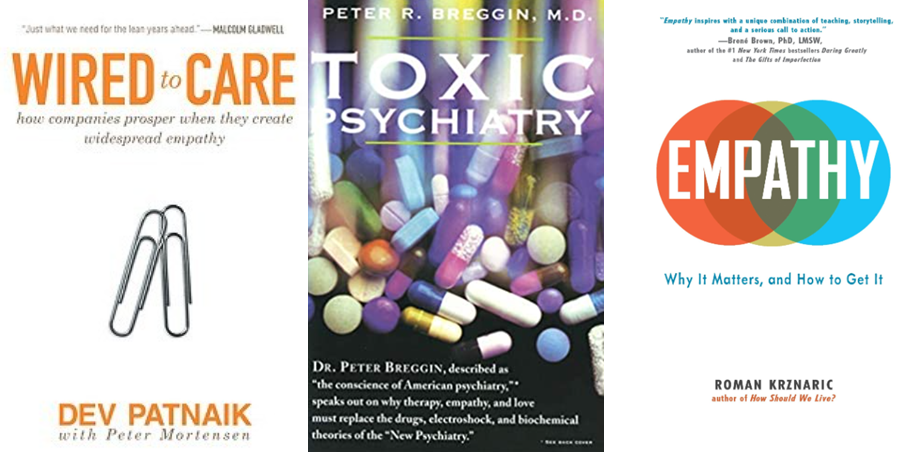
Here are books you may like to read from psychiatry, psychology and any personal or professional application aspects for gaining deeper understanding:
Latest Posts
Coaching Bharat Petroleum SAP Consultants, Business Users, Security on BP Challenges
In person-coaching to Bharat Petroleum team on business challenges using human centered design to bring in innovation. Manager Business Analytics and Insights Avinash Das “Thanks Gauri for such a great design thinking workshop !! So much of your presentation was just what I needed to boost my change in mindset and working practices for understanding internal or…
Read More
Creating a Customer Centric Culture via Design Thinking
Launching a Car company in a new and a very dynamic market like India especially being mindful of cost and service oriented considerations is very challenging. It comes with cut-throat competition and related struggles of a highly dynamic market. This Automobile Giant had setup a base in India and yet after many years many IT…
Read More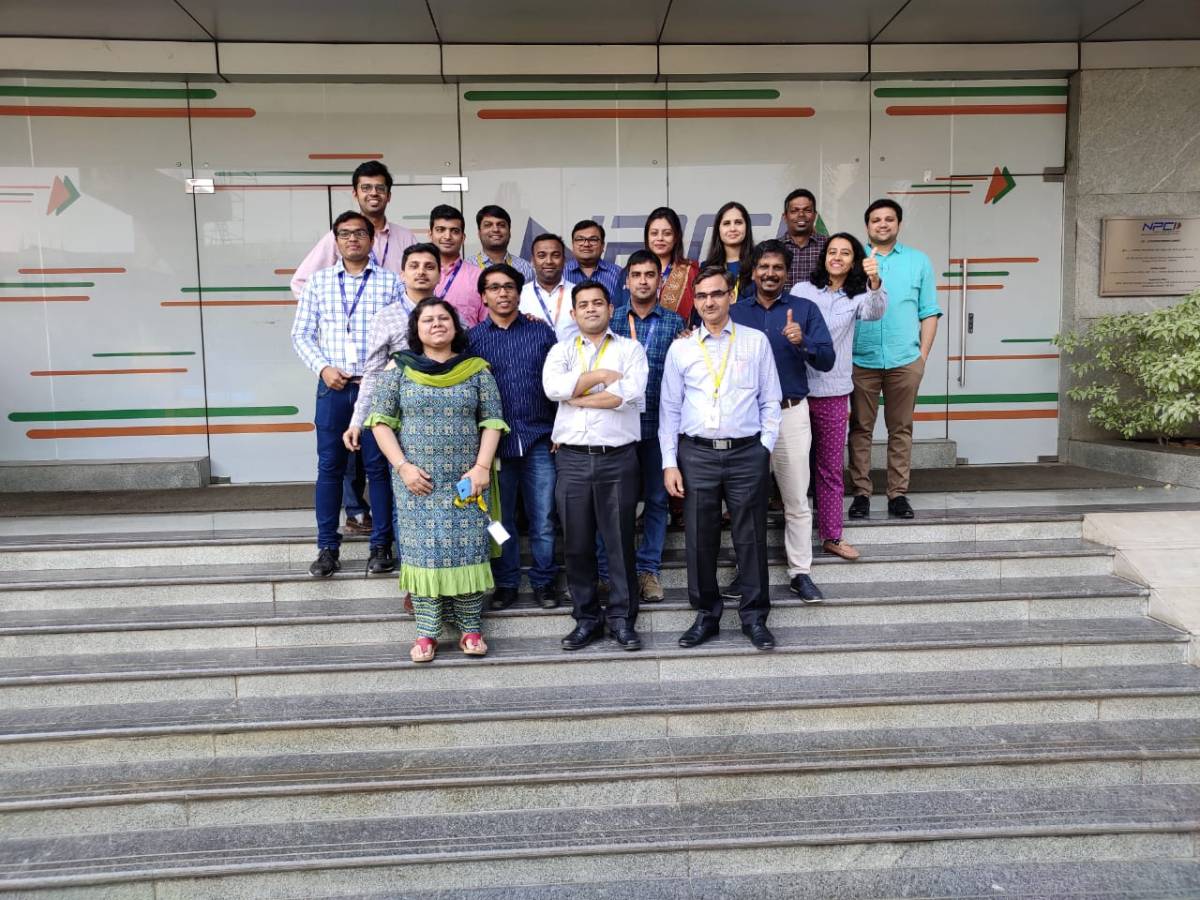
Coaching NPCI Teams on Customer Payment Dispute Challenges across 5 Products in association with RBI, ICICI, Axis, SBI, HDFC, Union Bank Jan-Mar’20
Recently I coached various teams across NPCI along with various banks, a financial org. that’s into digital payments enablement with a consumer base that’s massive, extremely diverse and ever-growing. Now, making payments for anyone is a BIG DEAL esp. safety, security, seamless and fast are few common consumer expectations.The consumers are spread across the entire…
Read More
Wiley “Bring IT Women Back to work” 3 full days experiential virtual learning on Design Thinking resolving issues on consumer online experience
This is close to my heart! Proud moment! Bringing women back to work in India! Crafted and Facilitated 3 days extensive Design Thinking virtual and complete hands-on experience for these powerful and strong women from different parts of India (Hyderbad, Chennai, Telangana, Agra, Goa, Bangalore, Ooty) who are all gearing up with the industry and…
Read MoreSomething went wrong. Please refresh the page and/or try again.
‘Empathy’, the heart of Design Thinking: “The definition of empathy is the ability to be aware of, understanding of, and sensitive to another person’s feelings and thoughts without having had the same experience. As human-centered designers, we consciously work to understand the experience of our clients and their customers.These insights inspire our designs” — IDEO
According to Hodges and Myers in the Encyclopedia of Social Psychology, “Empathy is often defined as understanding another person’s experience by imagining oneself in that other person’s situation: One understands the other person’s experience as if it were being experienced by the self, but without the self actually experiencing it. A distinction is maintained between self and other.”
Psychologists have identified three components of empathy: Cognitive, Emotional and Compassion.
- Cognitive: the capacity to understand another’s perspective or mental state.
- Emotional: the capacity to respond with an appropriate emotion to another’s mental states.
- Compassion: an emotion people feel when others are in need, which motivates people to help them.
Exercises that strengthen empathy:
- Being Curious.
- Listen actively. Practice active listening by reformulating the message to the person who just said it.
- Mirroring.
- Practise mindfulness.
- Be curious i.e. Ask questions to understand but not to listen to respond/argue.
- Listen with your eyes and ears.
- Stronger interactions.
- Build trust.
- Exercise empathy by learning impactful techniques like Observation, Interviewing and many more.
- Hormone called Oxytocin increases emotional empathy and oxytocin is released by deep listening, meditation. Talking helps in release of oxytocin. Low level of oxytocin leads to mood disorders, stress, depression and many other symptoms.
Q: How does empathy help the therapist in their profession?
A: Promotes helping behaviours by not judging clients to build deeper and stronger connections, by understanding what people are thinking and feeling to diagnose the mental disorder and provide the right treatment accordingly.
Q: How does empathy help any professional in their profession?
A: Empathy provides the inspiration to identify the right problem and especially the latent needs by validating your own assumptions and to further develop break through solutions that could be in the form of products, services and even delightful human experiences.
From both mental health and improving customer/human experience aspect it is must have skill in everyone for living better and also for creating stronger delightful experiences for your consumers.
“Empathy might be your ticket to connection and ultimately, success.“
Here is how I have been applying empathy: understanding the clients what they need and designing customised services tailoring to their needs(obvious and non obvious) by practicising observation, interviewing, immersion and even at atimes analogous experiences. Also during my coaching & facilitation, designing and facilitating empathy experiences for my clients to feel, think and practice deeper empathy technqiues to their challenges to get inspired towards designing creative solutions.
So dear all, How are you exercising the power of empathy in your daily life and how is it inspiring you to design meaningful experiences, strategies, products, services and systems ?, please do share your thoughts and ideas in the comment box at the bottom of the page.
Must watch for understanding empathy: The Human Connection to Patient Care:
What is the best way to ease someone’s pain and suffering? In this beautifully animated RSA Short, Dr Brené Brown reminds us that we can only create a genuine empathic connection if we are brave enough to really get in touch with our own fragilities.
References:
https://lesley.edu/article/the-psychology-of-emotional-and-cognitive-empathy
Here are books you may like to read from psychiatry, psychology and any personal or professional application aspects for gaining deeper understanding:
Latest Posts
Espire Leaders solving the right challenge by consumer centric lens to bringforth what is desirable, feasible and viable
Leaders feedback: Jonathan Isaac: Espire Infolabs Project Manager Jonathan Isaac:First ever training with 10% PPT and 90% practical sessions and scenarios…indeed it was a good learning….and we never felt that it was online….thanks Gauri.I loved the way the whole concept is being presentedto deal with the wicked problems.I loved the way the whole concept is…
Read More
JadeGlobal HR and Interns exploring their challenge “HMW effectively communicate virtually with our stakeholders”
Sukanya Patwardhan Vice President Talent Development”Thank you so much for your excellent session on Design Thinking for our HR team and internship batch. You made complex concepts simple in an interactive manner with a real time exercise to solve a problem.(How might we communicate more effectively virtually?).Your examples on how design thinking is used in…
Read MoreATSGreens Real estate HR team exploring their HR challenges – Dec’20
ATS Greens, Payroll Head, Krishnavir Singh “Your Online workshop was very effective, impactful and had fun” ATSGreens Group, CHRO Archana Kumar “Excellent way of working on our HR challenge with radical collaboration virtually and helps us explore the problem in a empathetic and creative way.It helps us to challenge our assumptions too.” ATSGreens HR Sakshi Kushwaha “The…
Read MoreGlenmark Pharmaceutical Global HR team exploring HR challenges with Design Thinking
Creating an experience for the pharmaceutical giant Glenmark global HumanResourceteam on exploring designthinking for their HRchallenges via empathy to design people-oriented processes, tools and practices, employee experience to deliver wow customer experience.Curious HR veterans globally from Glenmark collection of businesses from Learninganddevelopment, benefits, HRBP, talentacquisition, Plant HR, Sales HR, Corporate HR Employeecentred and patientcentred approach…
Read MoreSomething went wrong. Please refresh the page and/or try again.

